
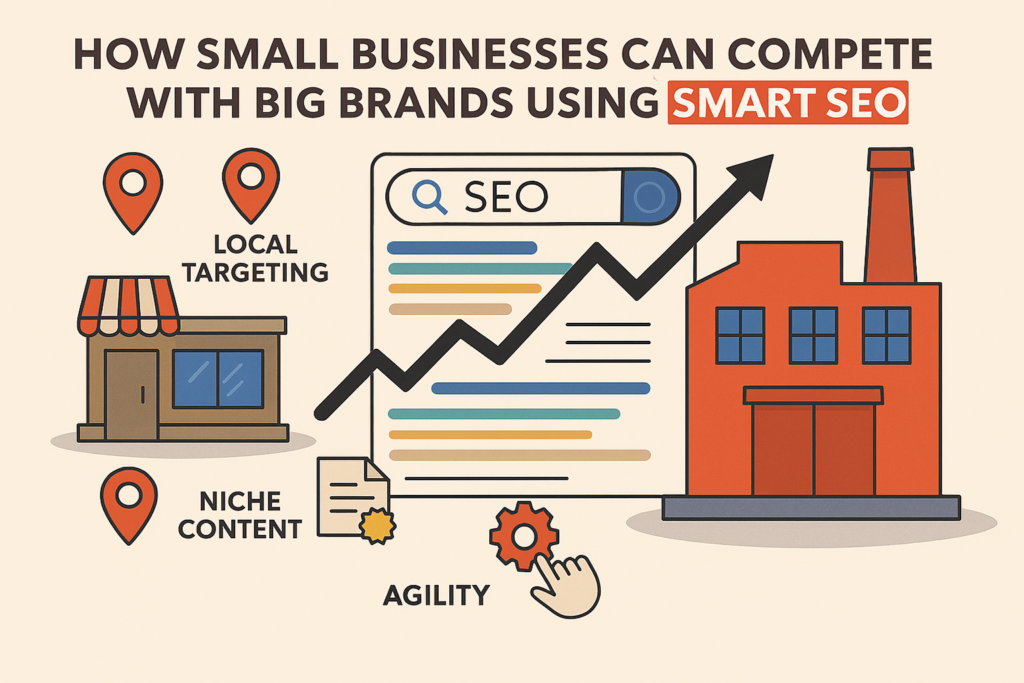

Introduction of Small Businesses Compete Onlineete Online
Small Businesses Compete Onlineete Online-: Many small business owners believe they cannot compete with large brands because bigger companies have larger budgets, bigger teams, and greater brand recognition. However, the digital landscape has created opportunities that allow small businesses to compete effectively and even outperform larger competitors in specific markets.
With the right digital marketing strategy, small businesses can build strong customer relationships, increase online visibility, and generate consistent leads without spending millions on advertising. Success online is no longer determined solely by budget; it depends on strategy, consistency, and understanding customer needs.
In this article, we’ll explore practical ways small businesses can compete with big brands online and achieve sustainable growth.
Why Small Businesses Have an Advantage
While large companies have extensive resources, small businesses often possess advantages that allow them to connect more effectively with customers.
Personalized Customer Service
Customers appreciate personalized experiences. Small businesses can provide direct communication, faster responses, and customized solutions that large corporations often struggle to deliver.
Greater Flexibility
Small businesses can adapt quickly to market changes, customer preferences, and industry trends without navigating multiple layers of approval.
Strong Community Connections
Local businesses often have stronger relationships within their communities, making it easier to build trust and customer loyalty.
How Small Businesses Compete Online with a Strong Website professional online
Create a User-Friendly Website
Your website serves as your digital storefront. Ensure it is:
- Mobile-friendly
- Fast-loading
- Easy to navigate
- Secure with HTTPS
- Optimized for conversions
A professional website helps establish credibility and encourages visitors to take action.
Focus on Branding
Consistent branding helps customers recognize and remember your business. Use consistent:
- Colors
- Fonts
- Logos
- Messaging
- Visual elements
Strong branding creates a professional image and differentiates your business from competitors.

Use SEO to Increase Visibility of Small Businesses Compete Online
Optimize for Relevant Keywords
Search Engine Optimization (SEO) helps small businesses attract organic traffic without paying for every click.
Identify keywords your target audience is searching for and incorporate them naturally into:
- Page titles
- Headings
- Blog posts
- Service pages
- Meta descriptions
Invest in Local SEO for Small Businesses Compete Online
Local SEO is one of the most powerful tools for small businesses.
Key local SEO strategies include:
Optimize Your Google Business Profile
Maintain accurate information such as:
- Business name
- Address
- Phone number
- Business hours
- Website URL
Collect Customer Reviews
Positive reviews improve credibility and increase local search rankings.
Use Location-Based Keywords
Include city and regional keywords throughout your website content.
Create High-Quality Content for Small Businesses Compete Onlineete Online
Content marketing allows small businesses to demonstrate expertise and build trust with potential customers.
Publish Informative Blog Poststo improve Small Businesses Compete Online
Regular blog content helps:
- Improve SEO rankings
- Answer customer questions
- Establish authority
- Generate organic traffic
Create Helpful Resources
Consider producing:
- Guides
- Checklists
- Case studies
- FAQs
- Industry insights
Valuable content attracts visitors and encourages them to engage with your brand.

The latest tips and news straight to your inbox!
Leverage Social Media Marketing for Small Businesses Compete Online
Social media provides affordable opportunities to reach and engage your audience.
Focus on the Right Platforms
Choose platforms where your target audience spends time, such as:
Ideal for local businesses and community engagement.
Perfect for visual storytelling and brand awareness.
Excellent for B2B marketing and professional networking.
Engage With Your Audience
Successful social media marketing is not just about posting content. Respond to:
- Comments
- Messages
- Reviews
- Questions
Active engagement helps build stronger customer relationships.
Use Paid Advertising Strategically to Small Businesses Compete Onlineete Online
Small businesses can compete with larger brands by running highly targeted advertising campaigns.
Google Ads
Google Ads helps businesses appear when customers actively search for products or services.
Benefits include:
- Immediate visibility
- Targeted traffic
- Measurable results
Social Media Advertising
Platforms like Facebook and Instagram allow precise targeting based on:
- Location
- Interests
- Demographics
- Behaviors
Even modest advertising budgets can generate meaningful results when campaigns are optimized correctly.
Focus on Customer Experience
Customer experience can be a major competitive advantage.
Respond Quickly
Prompt responses to inquiries increase customer satisfaction and improve conversion rates.
Provide Outstanding Support
Excellent customer service encourages repeat business and positive word-of-mouth referrals.
Simplify the Buying Process
Make it easy for customers to:
- Find information
- Contact your business
- Make purchases
- Request services
Reducing friction often leads to higher conversion rates.
The latest tips and news straight to your inbox!
Build Trust Through Social Proof
People trust recommendations from others more than traditional advertising.
Showcase Customer Reviews
Display testimonials prominently on your website and social media channels.
Share Success Stories
Case studies demonstrate real-world results and help potential customers feel confident about choosing your business.
Highlight Achievements
Showcase certifications, awards, partnerships, and industry recognition whenever possible.
Utilize Email Marketing
Email marketing remains one of the highest ROI digital marketing channels.
Build an Email List
Offer valuable resources in exchange for email subscriptions.
Examples include:
- Free guides
- Industry reports
- Checklists
- Exclusive offers
Send Valuable Content
Provide useful information rather than constant sales messages.
Effective email content includes:
- Tips
- News updates
- Educational content
- Promotions
- Product announcements
Analyze and Improve Performance of Small Businesses Compete Onlineete Online
Continuous improvement is essential for long-term success.
Track key performance metrics such as:
- Website traffic
- Conversion rates
- Lead generation
- SEO rankings
- Advertising performance
Use data insights to identify opportunities and optimize marketing efforts.
Conclusion of Small Businesses Compete Online
Competing with big brands online is entirely possible for small businesses. While large companies may have bigger budgets, small businesses can succeed by focusing on customer relationships, local SEO, content marketing, social media engagement, and personalized service.
By building a strong online presence, creating valuable content, leveraging digital marketing strategies, and delivering exceptional customer experiences, small businesses can attract customers, increase visibility, and achieve sustainable growth in today’s competitive marketplace.
The key is consistency. Businesses that continuously invest in their online presence and customer relationships often find themselves outperforming larger competitors in their target markets.